
Digital markets shift fast in the United States. Consumer habits evolve every quarter. Algorithms change without warning. If you want steady growth, you must master digital marketing with clarity and precision. This guide explains Master Digital Marketing: 7 Strategies for 2025 using practical insights, real data, and proven frameworks that increase brand visibility, leads, and revenue.
Modern businesses compete in crowded spaces. Attention feels scarce. However, opportunity has never been bigger. With the right online marketing tactics and a focused lead generation strategy, you can build brand awareness, increase customer engagement, and generate measurable ROI tracking. Let’s break everything down in a simple, powerful way.
What is a Digital Marketing Strategy?
A digital marketing strategy is a structured action plan. It aligns channels, messaging, and data into one clear growth roadmap. Instead of random posting or guessing, you build data-driven marketing systems around user intent and measurable goals. You guide prospects from awareness to purchase through a defined marketing funnel that supports long term customer retention.
At its core, strategy connects your digital presence with the full customer journey. You analyze buying intent, perform smart keyword research, and build authority using ethical backlinks. Strong strategies improve search rankings and organic traffic while supporting paid advertising when needed. Without structure, digital advertising campaigns waste budget. With strategy, every move compounds growth.
Why Digital Marketing Strategies Matter for SMBs
Competition in the U.S. is intense. Large brands dominate attention. Yet small and mid-size businesses (SMBs) can win through precision. A well-built strategy ensures audience targeting feels personal and relevant. Instead of shouting to everyone, you speak directly to those ready to act.
For small and mid-size businesses (SMBs), marketing budgets matter deeply. You cannot afford guesswork. Strong marketing analytics and clear marketing performance metrics reveal what works. Tools like CRM software and marketing automation tools streamline follow-up and increase customer retention. When your omnichannel experience feels consistent, brand loyalty strengthens naturally.
Content Marketing Strategy
Content marketing strategy builds trust before selling. You educate first. You solve real problems. Through inbound marketing and smart content distribution, you attract users actively searching for solutions. This improves organic search results and builds long term organic traffic.
High quality blogs, case studies, and guides target long-tail keywords that match user intent precisely. When you structure content clusters, Google rewards topical authority. For example, HubSpot reported that businesses publishing 16 plus blog posts monthly generate 3.5 times more traffic than those publishing four or fewer. That proves content drives sustainable brand awareness.
| Content Type | Purpose | Impact |
|---|---|---|
| Blog Guides | Educate | Improves search rankings |
| Case Studies | Build social proof | Increases conversion rate |
| Videos | Explain visually | Boosts engagement |
| Ebooks | Capture leads | Supports lead generation strategy |
Social Media Influencer Marketing
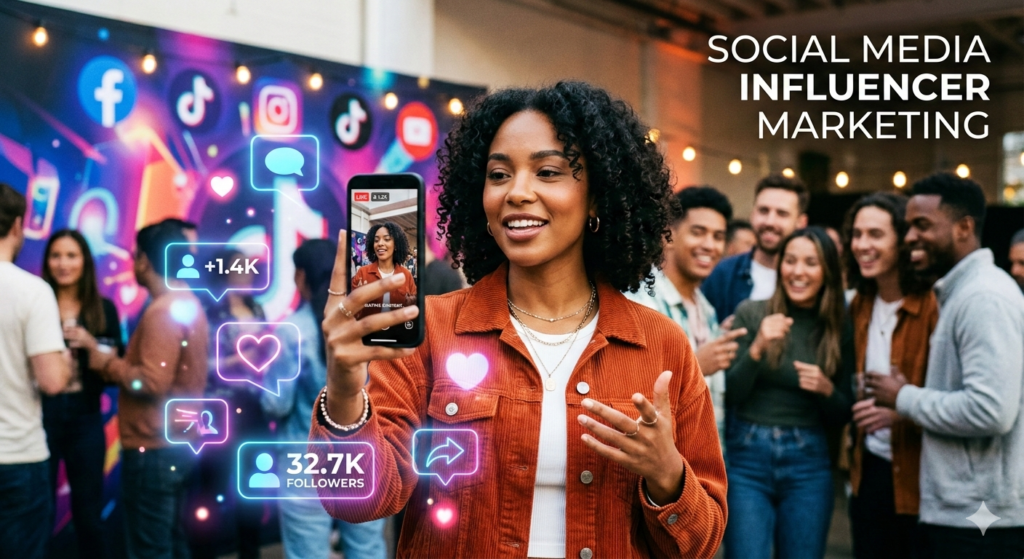
Influencer marketing works because people trust people. Social proof influences decisions faster than ads. When creators share authentic experiences, audience targeting becomes more natural. This increases customer engagement and strengthens digital presence.
Micro influencers often outperform celebrities. They generate higher click-through rate (CTR) and stronger buying intent. Encourage user-generated content to deepen trust. When real customers post reviews or stories, you amplify organic credibility and expand brand awareness without heavy paid advertising.
Search Engine Optimization (SEO) Strategy
SEO remains foundational in Master Digital Marketing: 7 Strategies for 2025. Organic visibility reduces dependency on paid advertising. Strong technical structure, optimized headings, and a mobile-friendly website enhance crawlability and user experience.
Start with precise keyword research. Target long-tail keywords aligned with user intent. Build authority with quality backlinks. Optimize your Google Business Profile for local geo-targeting. According to BrightLocal, 87 percent of U.S. consumers used Google to evaluate local businesses in 2023. That shows how SEO directly impacts organic search results and search rankings.
Email Marketing Automation
Email remains one of the highest ROI channels. It supports customer retention and improves lifetime value. Through smart email segmentation, you deliver personalized messages that match buying intent and stage in the marketing funnel.
Marketing automation tools track behavior. They trigger emails based on actions. This supports conversion tracking and improves conversion rate optimization. For example, abandoned cart workflows often recover 10 to 20 percent of lost sales. Integration with CRM software ensures follow-ups remain timely and relevant.
Pay-Per-Click (PPC) Advertising Strategy
Paid advertising accelerates results. It delivers immediate traffic. However, success depends on precise audience targeting and landing page optimization. Without alignment, budgets burn quickly.
Digital advertising campaigns require conversion tracking and ROI tracking. Test headlines. Improve click-through rate (CTR). Adjust geo-targeting for local precision. According to WordStream, average Google Ads conversion rates reach 4.4 percent across industries. When combined with strong SEO, PPC fuels both short term leads and long term brand awareness.
Video Marketing Strategy
Video dominates online consumption. YouTube acts as the second largest search engine. Short form video drives customer engagement and improves social proof.
Create tutorials, product demonstrations, and testimonials. Optimize titles around user intent and long-tail keywords. Strong content distribution across platforms enhances omnichannel experience. Businesses using video grow revenue 49 percent faster according to Wyzowl research. That makes video a powerful online marketing tactic in 2025.
Omnichannel Marketing Strategy
Consumers switch devices constantly. They browse on phones. They compare on laptops. They purchase on tablets. An omnichannel experience keeps messaging consistent across every touchpoint.
Align email, SEO, paid advertising, and social platforms into one system. Maintain unified branding. Use marketing analytics dashboards to evaluate performance across the full customer journey. When experiences feel seamless, brand loyalty grows naturally and customer retention improves.
7 Key Digital Marketing Strategies Comparison
Choosing the right mix matters. Each strategy serves a different role within your marketing funnel.
| Strategy | Speed | Cost | Long Term Value |
|---|---|---|---|
| SEO | Slow | Medium | Very High |
| PPC | Fast | High | Medium |
| Content | Moderate | Medium | High |
| Moderate | Low | Very High | |
| Influencer | Fast | Medium | Medium |
| Video | Moderate | Medium | High |
| Omnichannel | Long Term | High | Extremely High |
Master Digital Marketing: 7 Strategies for 2025 requires integration rather than isolation.
How to Choose the Right Digital Marketing Strategy
Start with your goals. Define revenue targets. Study marketing performance metrics carefully. Evaluate marketing analytics data before expanding channels.
Consider business stage. New brands may prioritize paid advertising for speed. Established brands may double down on organic traffic. Always measure ROI tracking and conversion rate optimization. Strategic balance ensures stability even during market shifts.
Common Mistakes to Avoid
Many businesses chase trends blindly. They ignore user intent. They neglect landing page optimization. This reduces conversion tracking accuracy and wastes budget.
Others forget mobile optimization. A slow mobile-friendly website kills engagement instantly. Some fail to update Google Business Profile listings. Inconsistent data harms search rankings. Smart marketers rely on data-driven marketing instead of assumptions.
FAQs About Digital Marketing Strategies
How long does SEO take in the U.S. market? Typically three to six months depending on competition and keyword research quality.
Is PPC worth it for startups? Yes if conversion tracking and landing page optimization are strong.
How does automation increase ROI? Marketing automation tools reduce manual effort and improve email segmentation accuracy.
Putting Your Digital Marketing Strategy into Action
Execution separates planners from winners. Audit your digital presence. Map the full customer journey. Align channels into one cohesive omnichannel experience.
Implement tracking systems. Measure marketing performance metrics weekly. Adjust based on marketing analytics insights. When you master digital marketing with disciplined systems, growth becomes predictable. Master Digital Marketing: 7 Strategies for 2025 provides the structure you need to dominate competitive U.S. markets with confidence and clarity.